
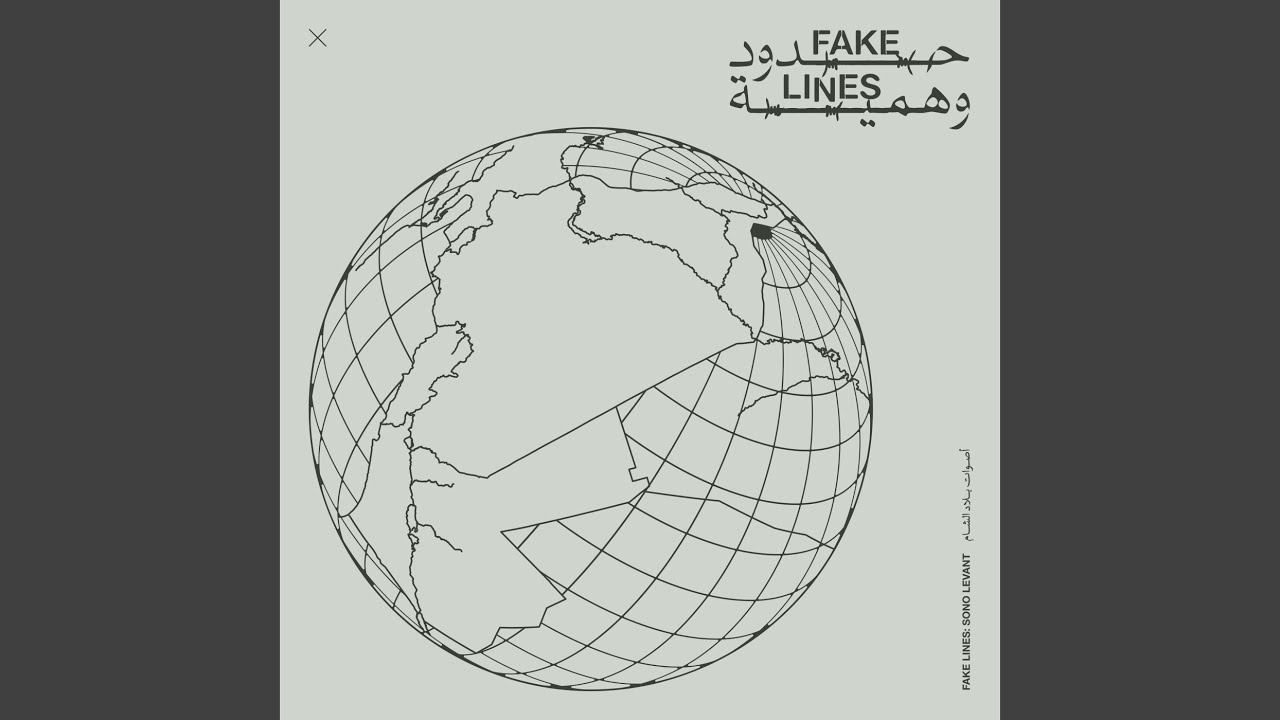
“Fake Lines: Sono Levant” redraws the map by ear. The 36-track compilation refuses the borders that splinter the Levant, assembling a continent of sound where histories touch again and circulate freely. Organized by the non-profit label Fake Lines with Proton Radio, it treats curation as political praxis: majority proceeds are routed to grassroots relief in Palestine—specifically food sovereignty work—while the remainder is shared among the artists, with no royalties skimmed by intermediaries. The gesture lands as both manifesto and method: a musical commons built amid enclosure.
Across two and a half hours, the record moves with the restless logic of a people on the move. Folk timbres—buzuq, oud, frame drum, voices thick with air—thread through synthetic stacks and blown-out drum programming. You hear modal melodies bent against cold oscillators, hand percussion ghosting under mechanized kicks, guitars that smear into feedback before dissolving into humid ambient. The sequencing is sharp: eruptions of hip-hop and post-rock puncture stretches of drone and electronica, keeping the arc volatile but legible, more road atlas than mood board.
The roster reads like a region refusing amnesia. Bu Kolthoum’s gravel and gravitas ride sub-heavy beats with a fighter’s economy; El Morabba3 return to their exquisite sense of tension, carving riffs that feel both battered and aerodynamic. Hello Psychaleppo’s circuitry flickers with dabke’s engine, translating wedding-floor kinetics into widescreen synth choreography. Zeid Hamdan’s touch is unmistakable in its patient layering; Bu Nasser Touffar spits with caustic precision; Tanjaret Daghet bring a bruised alt-rock heft. Around them orbit voices from Tunisia, Algeria, Iraq, Turkey, and farther afield—France, Venezuela, Italy, India—expanding the Levant not as a geography but as a relation.
Production choices honor fray and friction. Many tracks keep the grit of room tone, field-recorded edges, a mix aesthetic that privileges presence over polish. Yet the mastering corrals the diversity into a coherent dynamic field; the listening experience breathes like a live city—horns in the distance, a club underfoot, a prayer somewhere between. The compilation’s companion release as a six-disc vinyl set, paired with Kelvin Bown’s restored historical images of the Levant, frames the music as an archive-in-the-making, a counter-museum you can hold.
Context sharpens the cut. Released October 17, 2025, and dedicated to nasheed artist Hamza Abu Qenas—killed in October 2024—the album bears grief without fetishizing it. Instead, it insists on continuity: collaboration as infrastructure, rhythm as a border checkpoint that always fails to stop the traffic. In a year when “compilation for cause” has become its own micro-genre, “Sono Levant” stands out by welding message to methodology. It’s not charity; it’s networked self-determination, written in basslines and breath. Listen front to back and you can almost see the lines fading.
